Resources
Better ways to design customer operations.
Practical perspectives on sourcing, operating models, resilience, AI, provider networks, and the choices that shape customer operations.



What interests you?
Latest thinking
Ideas and practical guidance for making better customer-operations decisions.
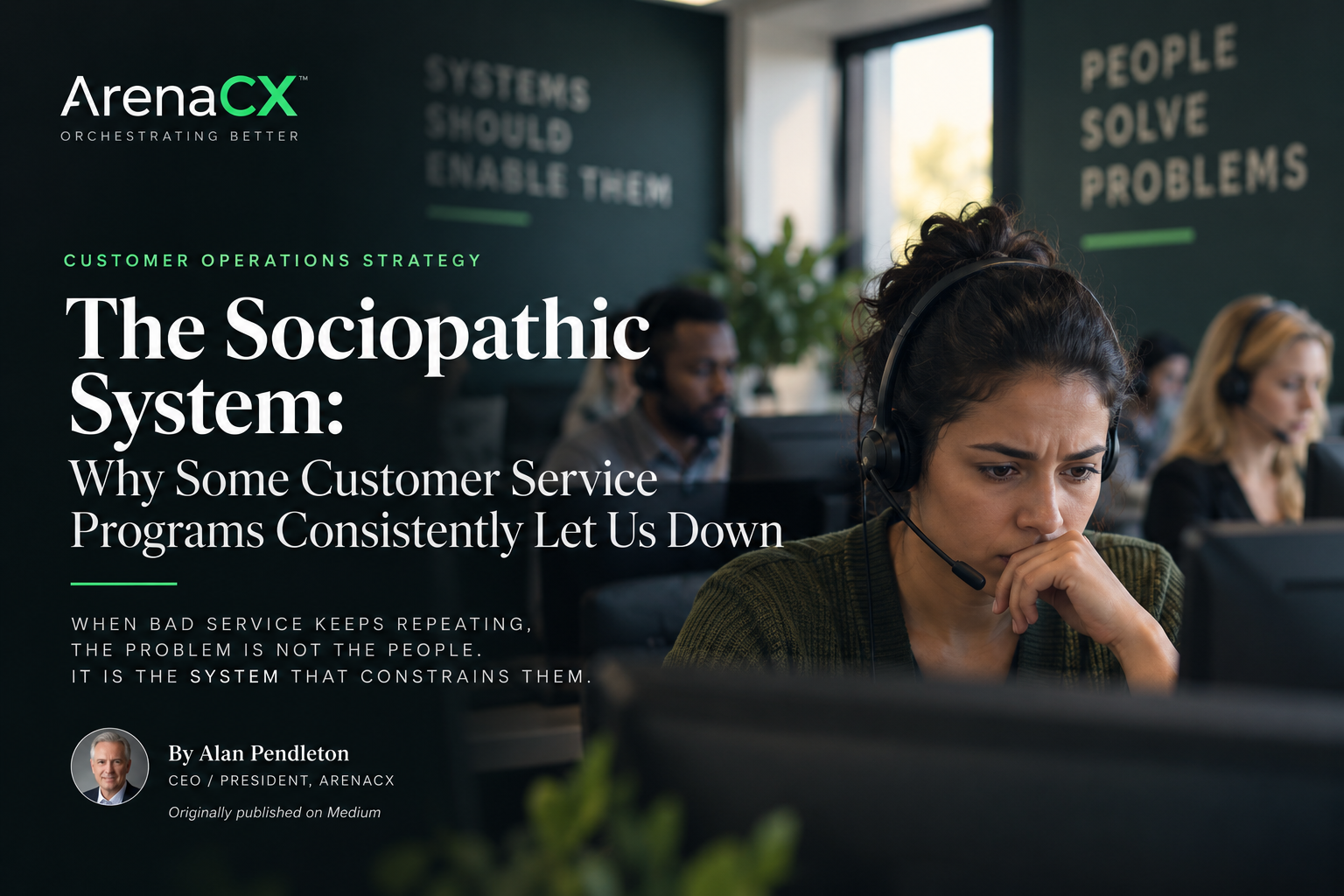
The Sociopathic System: Why Some Customer Service Programs Consistently Let Us Down
When bad service keeps repeating, the problem is often not the people. It is the system that constrains them.
Read
Staying in Control Through the Chaos of Peak Season
Forecasting helps you see the peak. Staying in control requires an operating model that can turn the forecast into capacity - fast enough to matter.
Read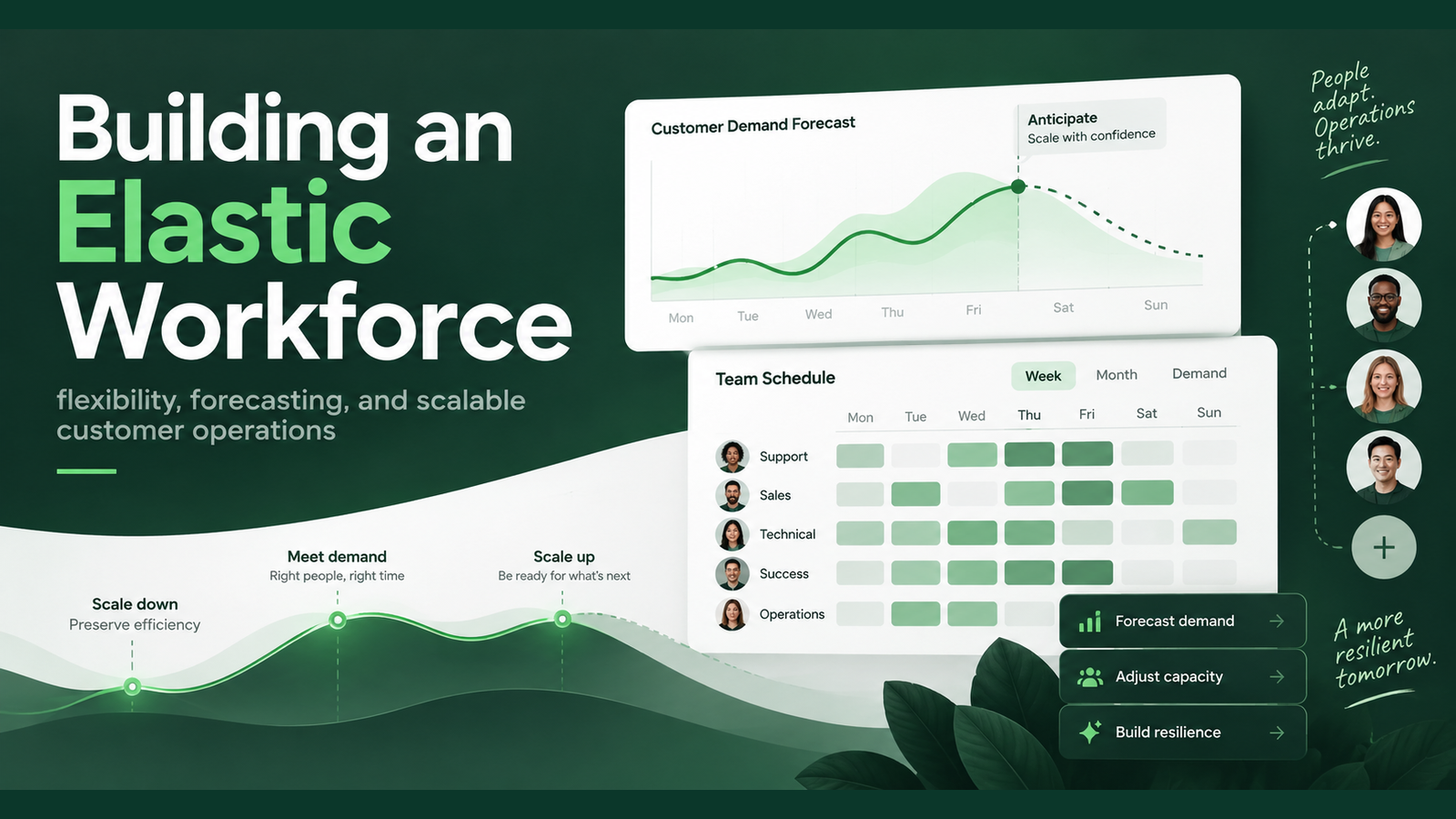
Building an Elastic Workforce: Planning, Systems, and Execution
Workforce management is not only a forecasting problem. The harder challenge is building the operating levers to add, shift, and release capacity when demand moves differently than planned.
Read
You’re Gonna Need a Bigger Boat: Improve Scalability in Customer Service
When demand suddenly outruns staffing, the answer is not always more people. Better customer-operations systems create multiple capacity levers — and the ability to route work where the network can absorb it.
Read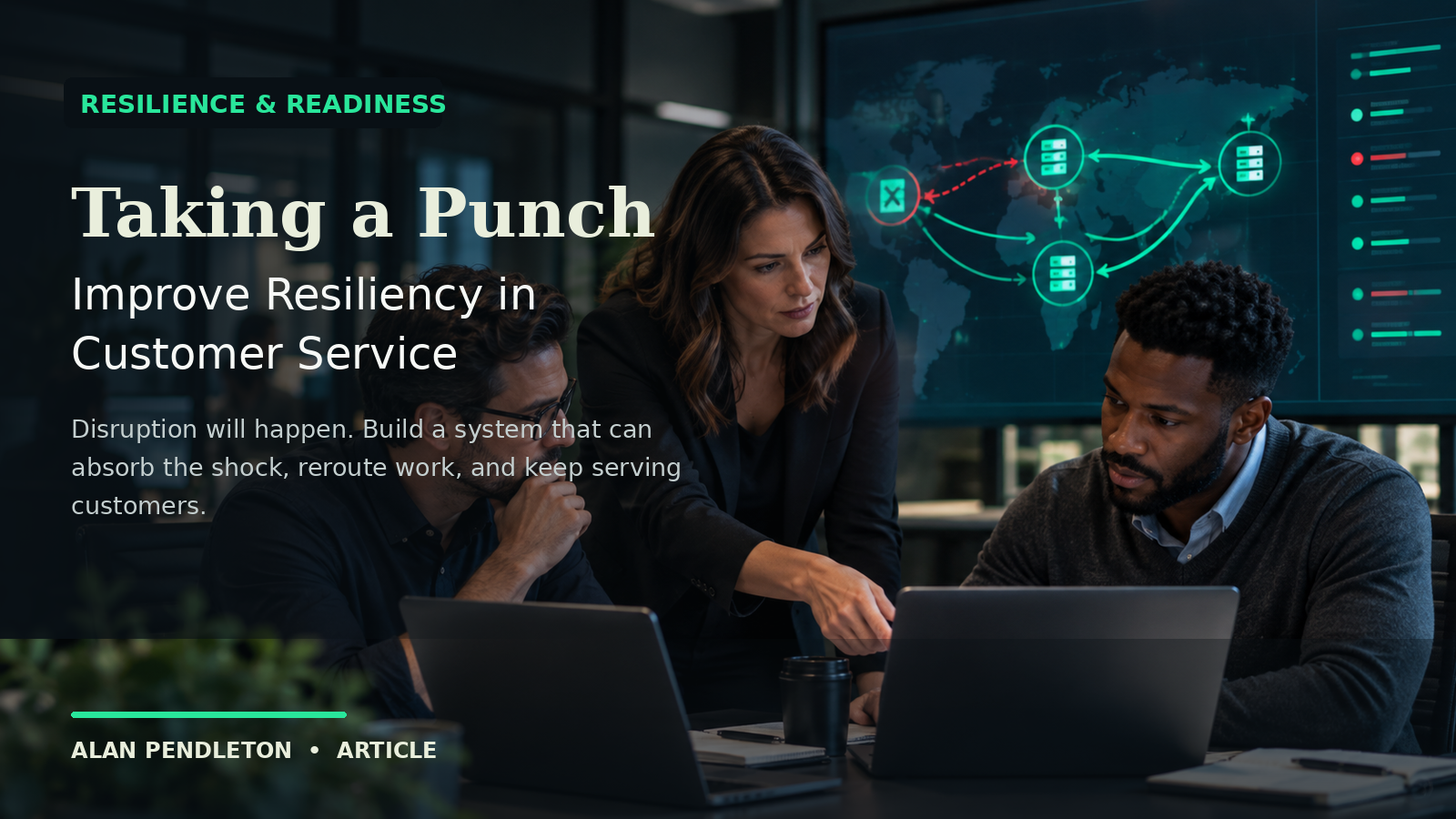
Taking a Punch: Improve Resiliency in Customer Service
Disruption will happen. The question is whether your customer-operations system can absorb the shock, reroute work, and keep serving customers.
Read
Using Software to Be More Human: 5 Ways Computational Thinking Will Revolutionize Human-Powered Customer Service
AI is getting better at acting human. The bigger opportunity may be using computational thinking to design the system around people so customer operations become more focused, adaptive, scalable, resilient, and intelligent.
Read
A Human Response to the Rise of Chatbots
AI has moved far beyond the chatbot boom. The operating question Alan posed years ago is more urgent now: how do we design the human side of customer service to work with increasingly capable machines?
Read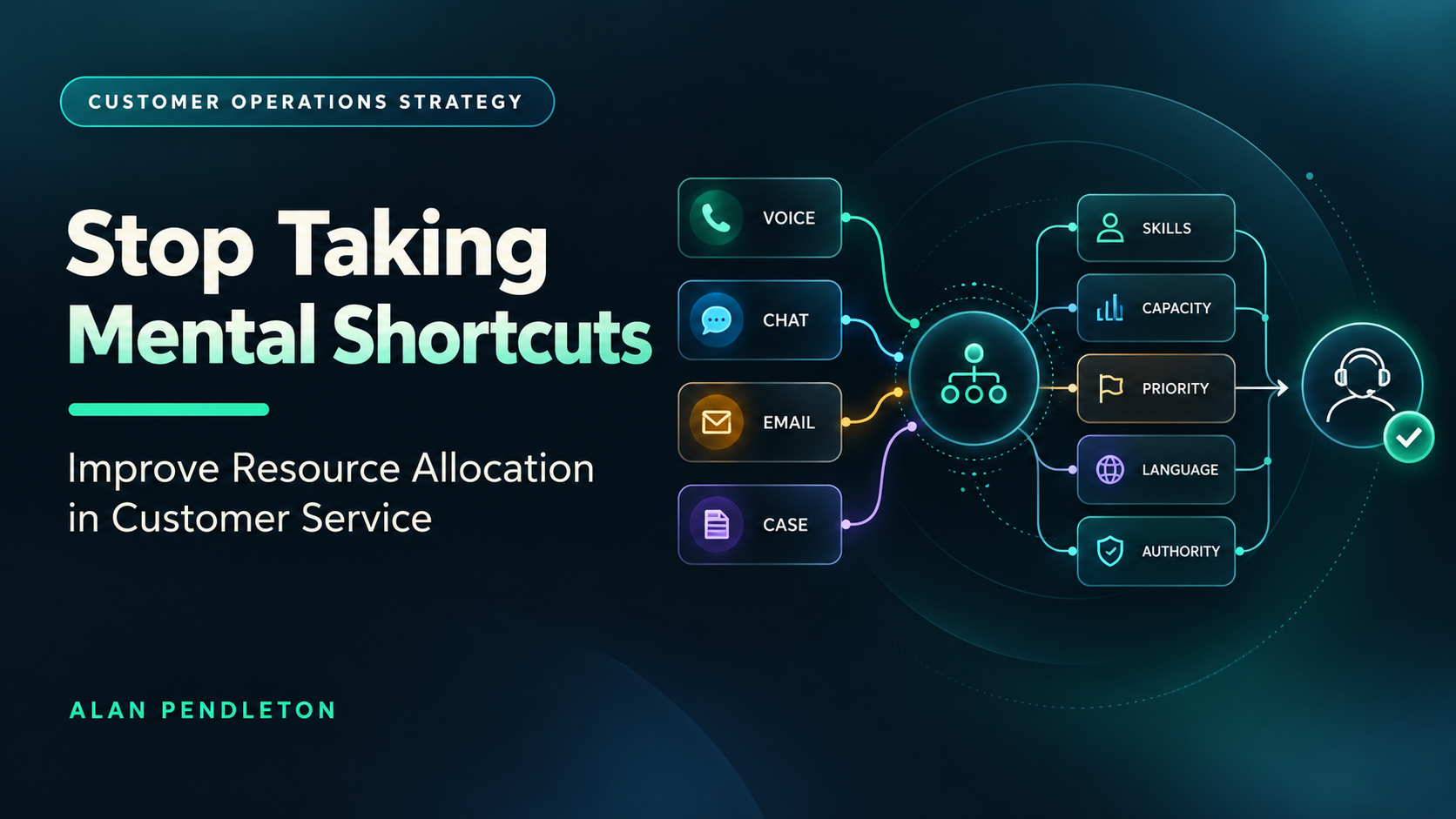
Stop Taking Mental Shortcuts: Improve Resource Allocation in Customer Service
Human judgment is valuable precisely because customer problems are messy. The operating system should do more of the mechanical matching so people can spend judgment where it matters.
Read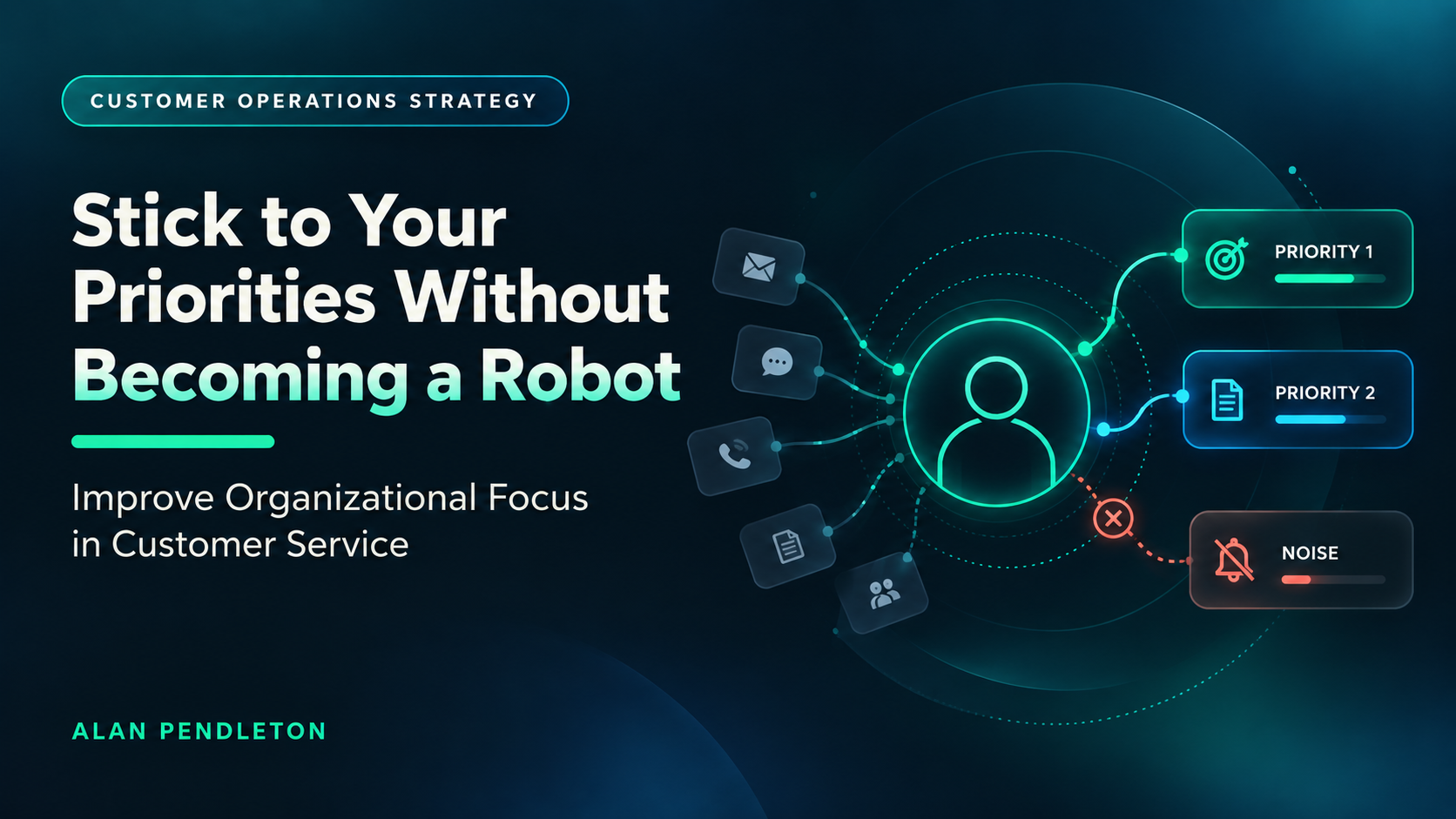
Stick to Your Priorities Without Becoming a Robot: Improve Organizational Focus in Customer Service
Customer-operations teams do not need humans to behave like software. They do need systems that make priorities explicit enough that people can spend judgment on the work that matters.
Read
Bots Won’t Make Us Better People, but They Might Make Our People Better
AI does not have to replace the human side of service to transform it. The more interesting opportunity is using software to remove mechanical friction around people so judgment, empathy, and creativity can matter more.
Read
The “Case Economy:” Decentralizing to Improve Decision-Making in Customer Service
Customer operations get more adaptive when judgment moves closer to the customer - with clear guardrails, better information, and technology that helps the system learn.
Read
The Cheapest BPO Is Rarely the Cheapest BPO
Hourly rate is one input. The real decision is total cost per successful outcome.
Read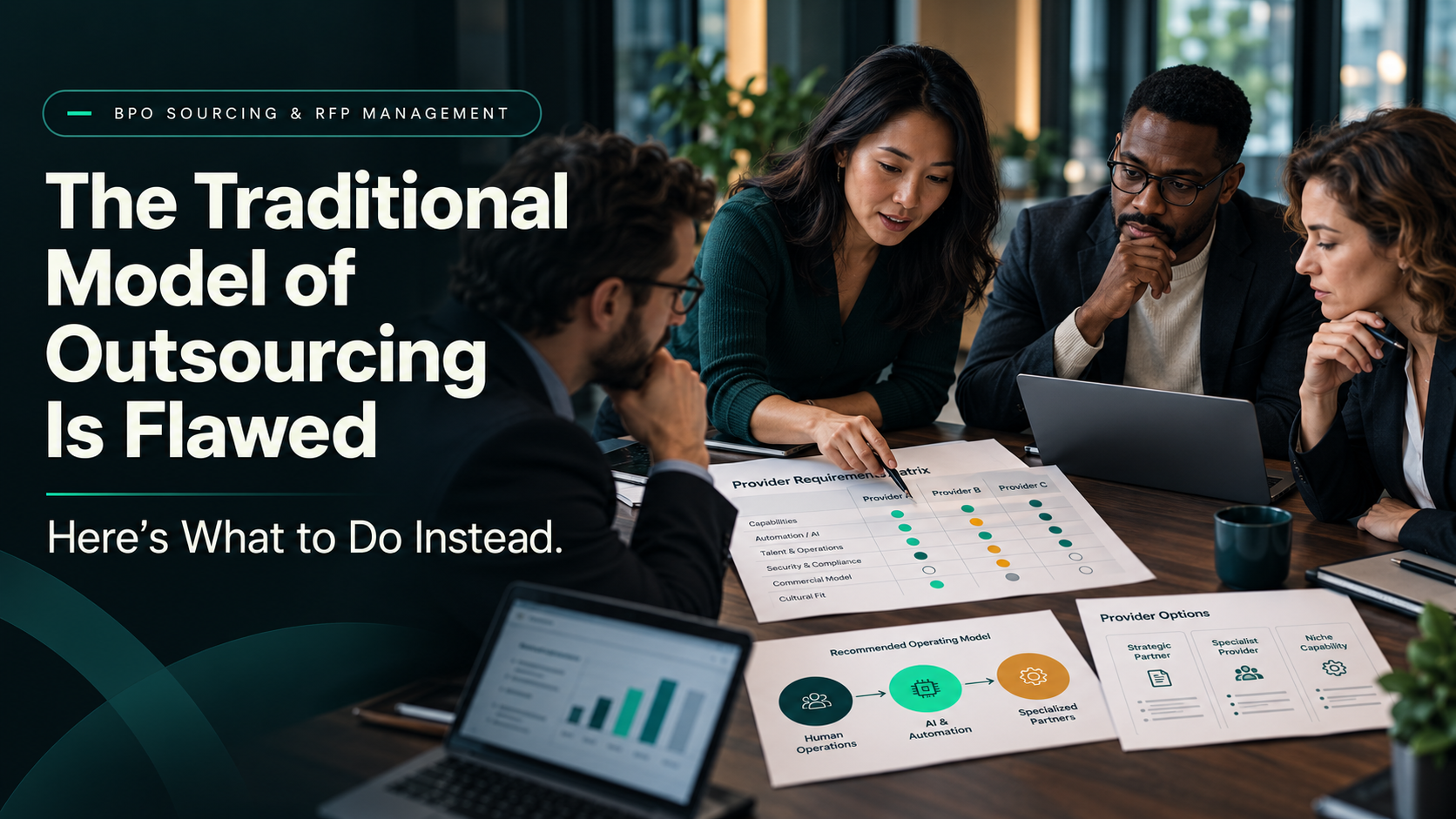
The Traditional Model of Outsourcing Is Flawed — Here's What to Do Instead
Outsourcing should make customer operations more adaptable, not lock the business into assumptions about labor, demand, technology, and provider roles that become expensive to change.
Read
How to Build a Customer Support Forecast
A useful forecast is not a monthly ticket guess. It is an operating model that connects business drivers to contact propensity, channel volume, handle time, workload, coverage, and risk - then learns from what actually happened.
Read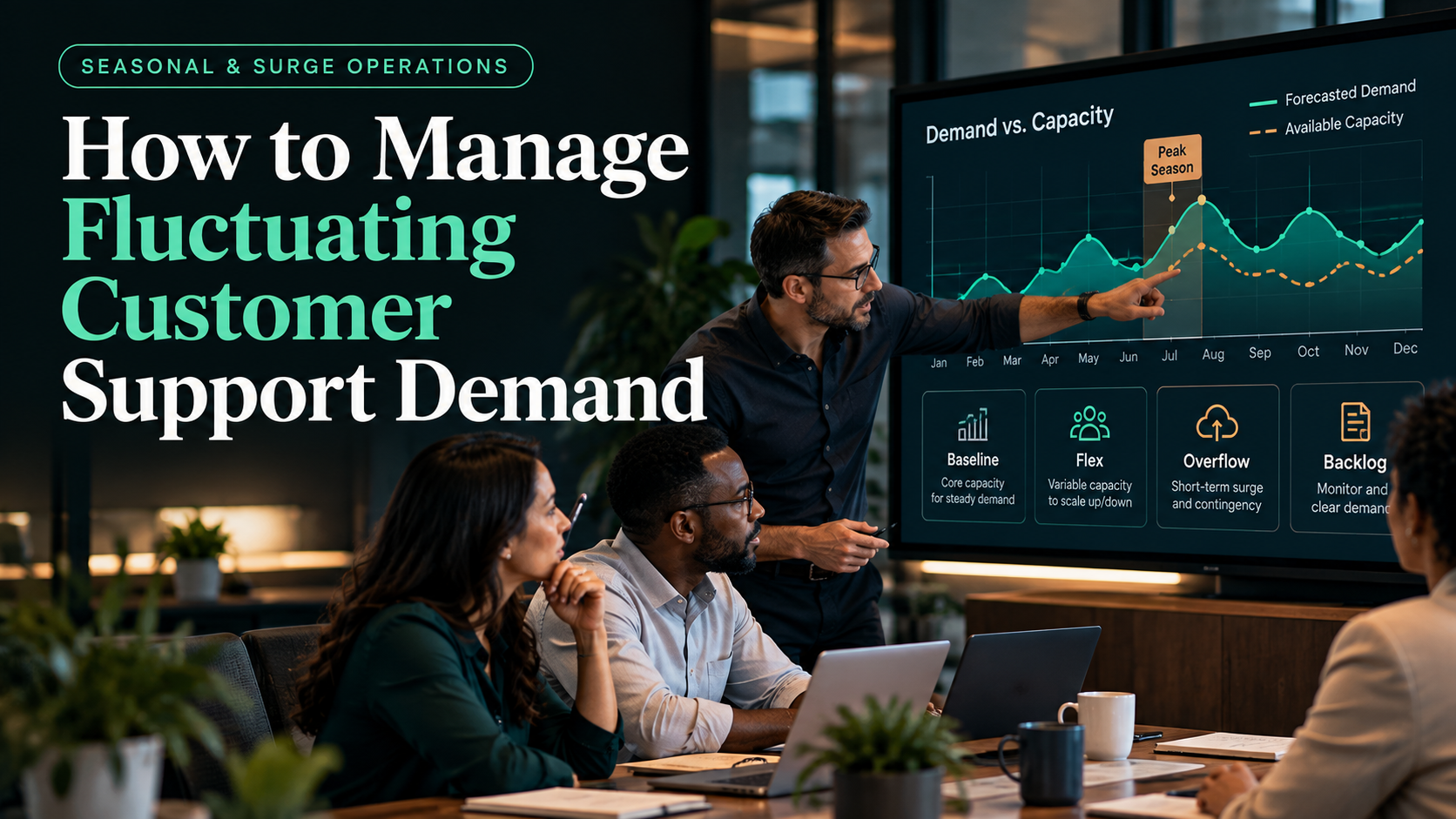
How to Manage Fluctuating Customer Support Demand
Forecasting matters. But the operating advantage comes from detecting the gap between demand and effective capacity early, then activating the right lever before service degrades.
Read
How to Select the Right Contact Center Partner
The right BPO is not the company with the best pitch. It is the provider whose operating model fits your work, clears your risk constraints, can prove the fit with evidence, and can keep adapting as demand, technology, and AI change the job.
Read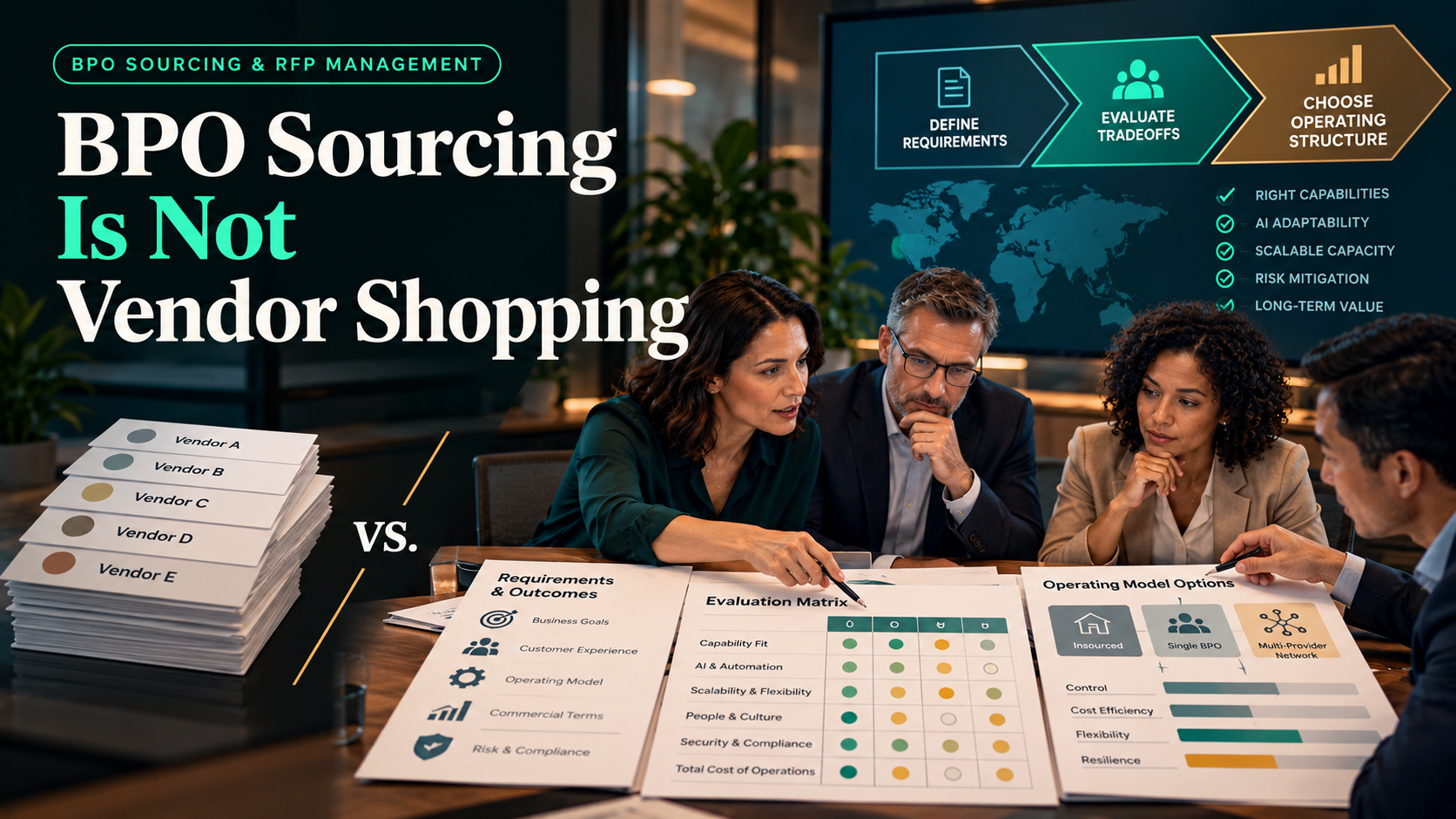
BPO Sourcing Is Not Vendor Shopping
The real job is not to gather familiar provider names. It is to define the operating requirement, create a meaningful option set, expose the tradeoffs, and choose a structure that can adapt as the business changes.
Read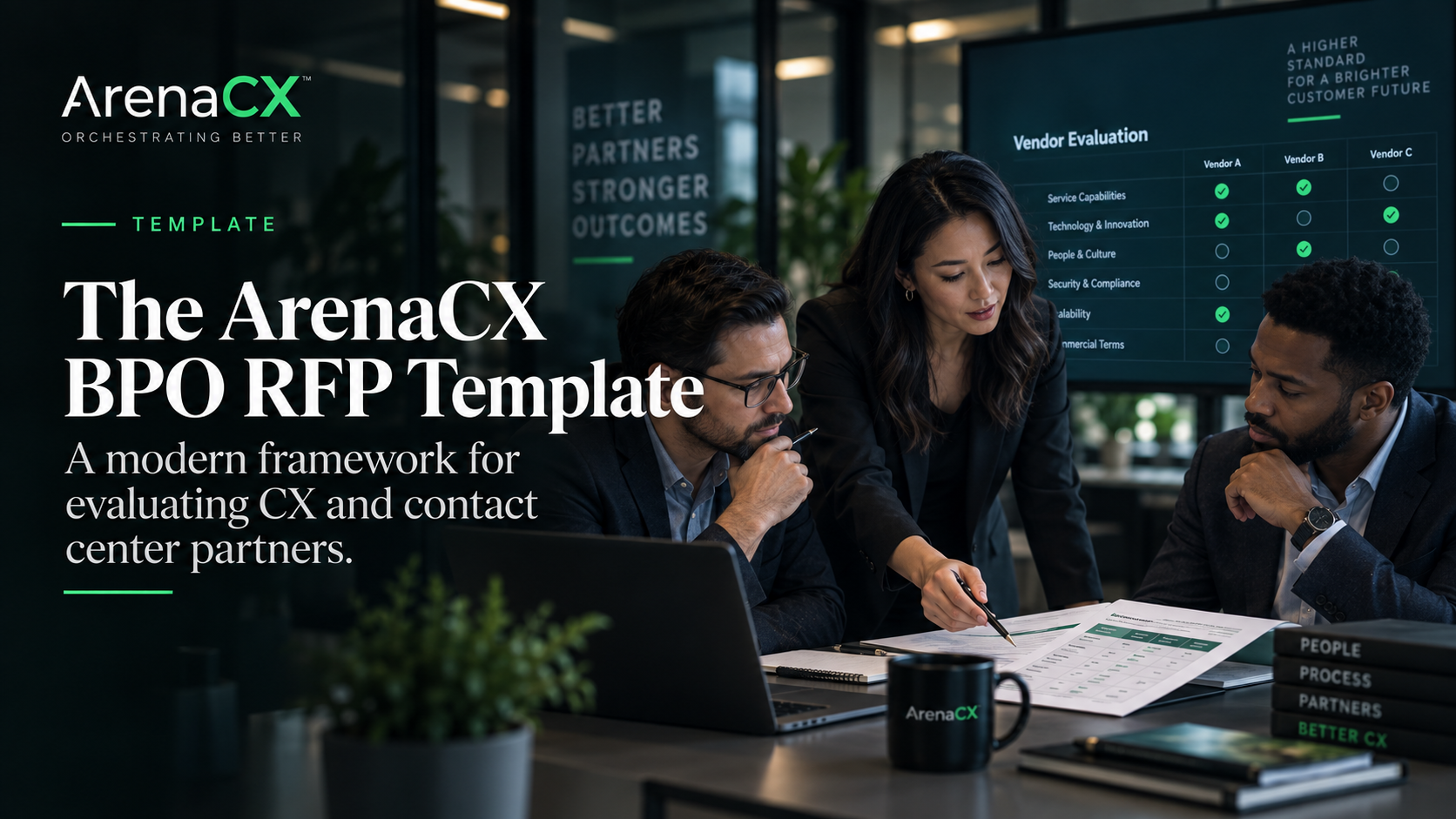
The ArenaCX BPO RFP Template
A practical framework for defining your requirements, standardizing provider responses, and making a BPO selection process easier to compare and defend.
Download the BPO RFP Template
Planning for Uncertainty: Use the T.E.A.M. Approach to Make Your Customer Service Operations Resilient
A practical way to map customer-operations dependencies, prioritize the risks that matter, choose a response, and turn the choice into tested readiness.
Read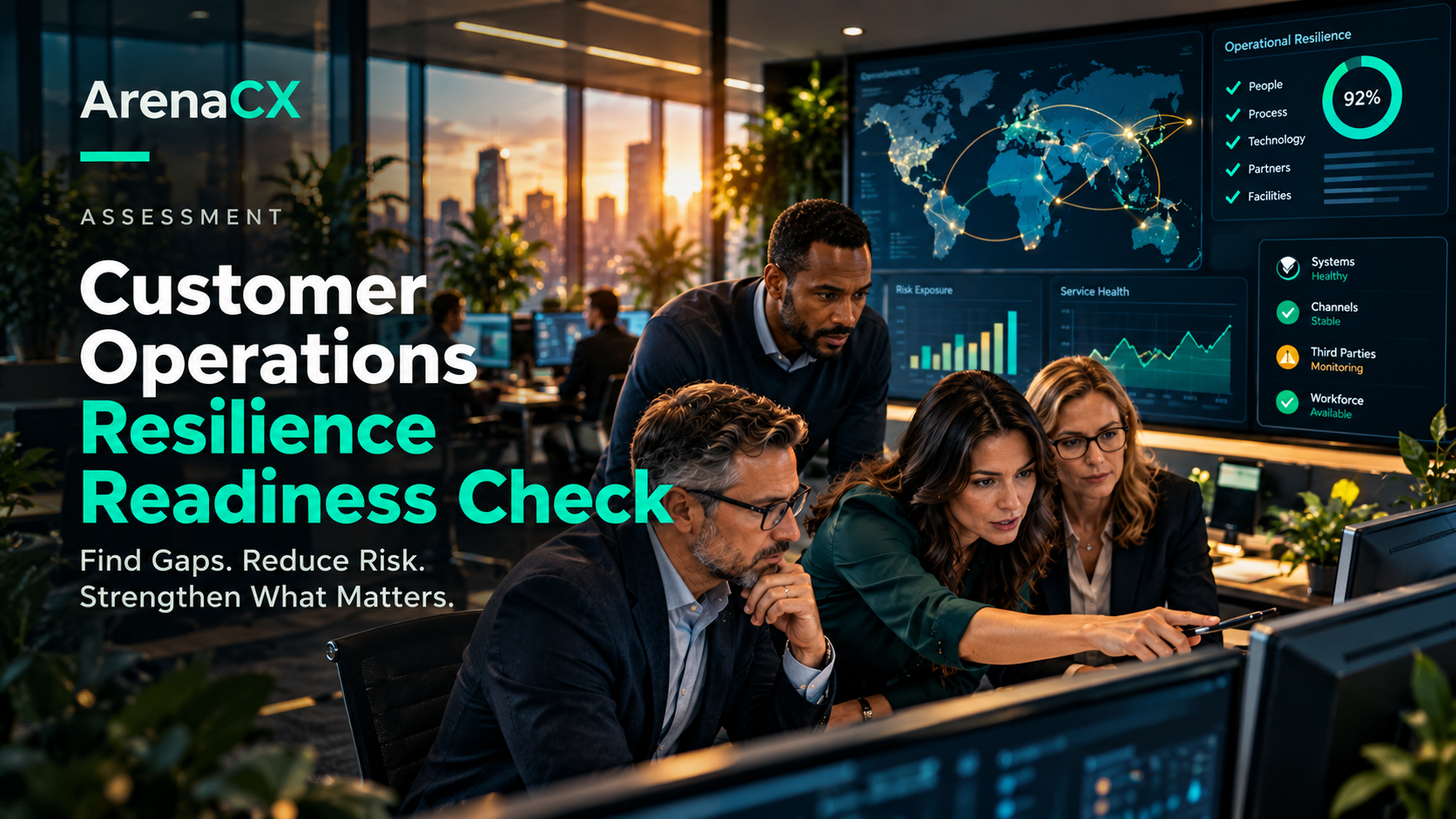
Customer Operations Resilience Readiness Check
Use this assessment to evaluate your current state, identify gaps, and strengthen your readiness for disruption in customer operations.
Read
One Provider or Many? A Decision Framework for Customer Operations
The right provider model is not a philosophy. It is a design choice. Use this framework to decide when simplicity, diversification, specialization, flexibility, and governance matter most.
Read
The Impact Design Checklist for Customer Operations
A practical checklist for building Ownership, Location, Employment, and Mission considerations into customer-operations sourcing without losing sight of operating fit. Use it to define the goal, source relevant providers, evaluate evidence, structure the decision, and measure only what the program can support.
Read
Business for Good Without the Trade-Off: Designing Impact Into Customer Operations
A practical framework for designing impact into customer operations while keeping operating fit, evidence, and business requirements intact.
Read
From Good Intentions to Measurable Impact in Customer Operations
Good intentions matter, but trustworthy impact language requires an evidence chain. Start with the claim, define the indicator, name the source and owner, and let the evidence set the limits of what you say.
Read
Designing a Customer-Operations Network for Optionality
Optionality is not the same as having more vendors. It is the ability to move work, capacity, or capability to another credible path without rebuilding the operating model when conditions change.
Read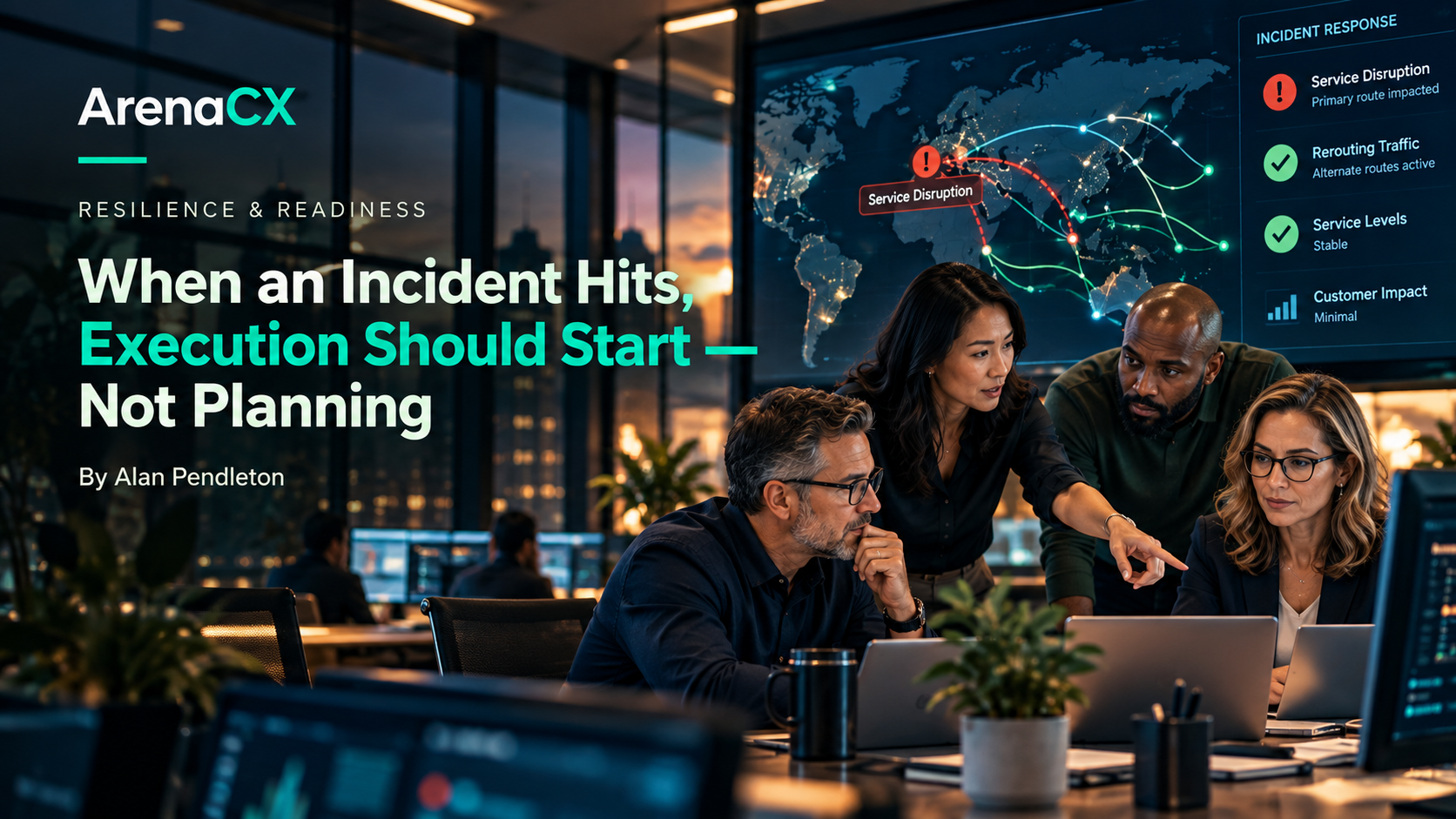
When an Incident Hits, Execution Should Start — Not Planning
The first minutes after disruption are the wrong time to begin sourcing capacity, negotiating terms, provisioning access, or deciding who is in charge. Good readiness moves that work upstream.
Read
Availability Is Not Readiness
A backup provider, alternate site, or reserve workforce can exist on paper and still be unable to take live customer work. Readiness begins when the dependencies are proven.
Read
AI Changes the Sourcing Decision — Not the Need for One
AI is changing what customer-operations leaders are buying, how they evaluate providers, and where responsibility sits. That makes sourcing more important—not less.
Read
Business for Good in Customer Operations: Four Lenses for Impact
Customer-operations spend can do more than buy capacity. When impact is defined clearly and evaluated alongside performance, sourcing can widen opportunity without turning purpose into a substitute for operating fit.
Read
Are We Missing a Layer in the Customer Journey? — The Experience Chain Behind Customer Operations
Customer journeys show what customers experience. They do not always show the chain of people, providers, systems, rules, data, and capacity that has to work behind each moment. That hidden chain is often where the experience succeeds or fails.
Read
It’s Time to Level Up With Outsourcing
Outsourcing is no longer just a labor-cost decision. Done well, it is a way to add capability, optionality, operating discipline, and resilience without building everything yourself.
ReadTools & Resources
Practical resources for planning and evaluation.
The ArenaCX BPO RFP Template
A practical framework for defining your requirements, standardizing provider responses, and making a BPO selection process easier to compare and defend.
Download the BPO RFP TemplatePlanning for Uncertainty: Use the T.E.A.M. Approach to Make Your Customer Service Operations Resilient
A practical way to map customer-operations dependencies, prioritize the risks that matter, choose a response, and turn the choice into tested readiness.
ReadCustomer Operations Resilience Readiness Check
Use this assessment to evaluate your current state, identify gaps, and strengthen your readiness for disruption in customer operations.
ReadOne Provider or Many? A Decision Framework for Customer Operations
The right provider model is not a philosophy. It is a design choice. Use this framework to decide when simplicity, diversification, specialization, flexibility, and governance matter most.
ReadThe Impact Design Checklist for Customer Operations
A practical checklist for building Ownership, Location, Employment, and Mission considerations into customer-operations sourcing without losing sight of operating fit. Use it to define the goal, source relevant providers, evaluate evidence, structure the decision, and measure only what the program can support.
ReadFrom Good Intentions to Measurable Impact in Customer Operations
Good intentions matter, but trustworthy impact language requires an evidence chain. Start with the claim, define the indicator, name the source and owner, and let the evidence set the limits of what you say.
ReadWorking on a customer operations challenge?
Put the thinking to work.
If you are evaluating providers, redesigning an operating model, preparing for changing demand, or working through a more complex customer-operations challenge, we can help you explore the options.